AI is changing how software is built. Developers can now write code faster, generate tests, debug issues, create documentation, and automate repetitive development work.
For founders, this raises an obvious question: Can AI reduce development cost without reducing product quality?
The answer is yes. But only when AI is used in the right places.
AI can reduce the hours needed to build software
A large part of software development involves repetitive work.
AI can help developers move faster with:
- Repetitive or boilerplate code
- Basic API integrations
- Test case generation
- Documentation
- Debugging
- Code refactoring
- Internal tools
- Early prototypes
The important point is that AI does not necessarily replace the developer. It reduces the amount of manual work the developer needs to do.
A simple example
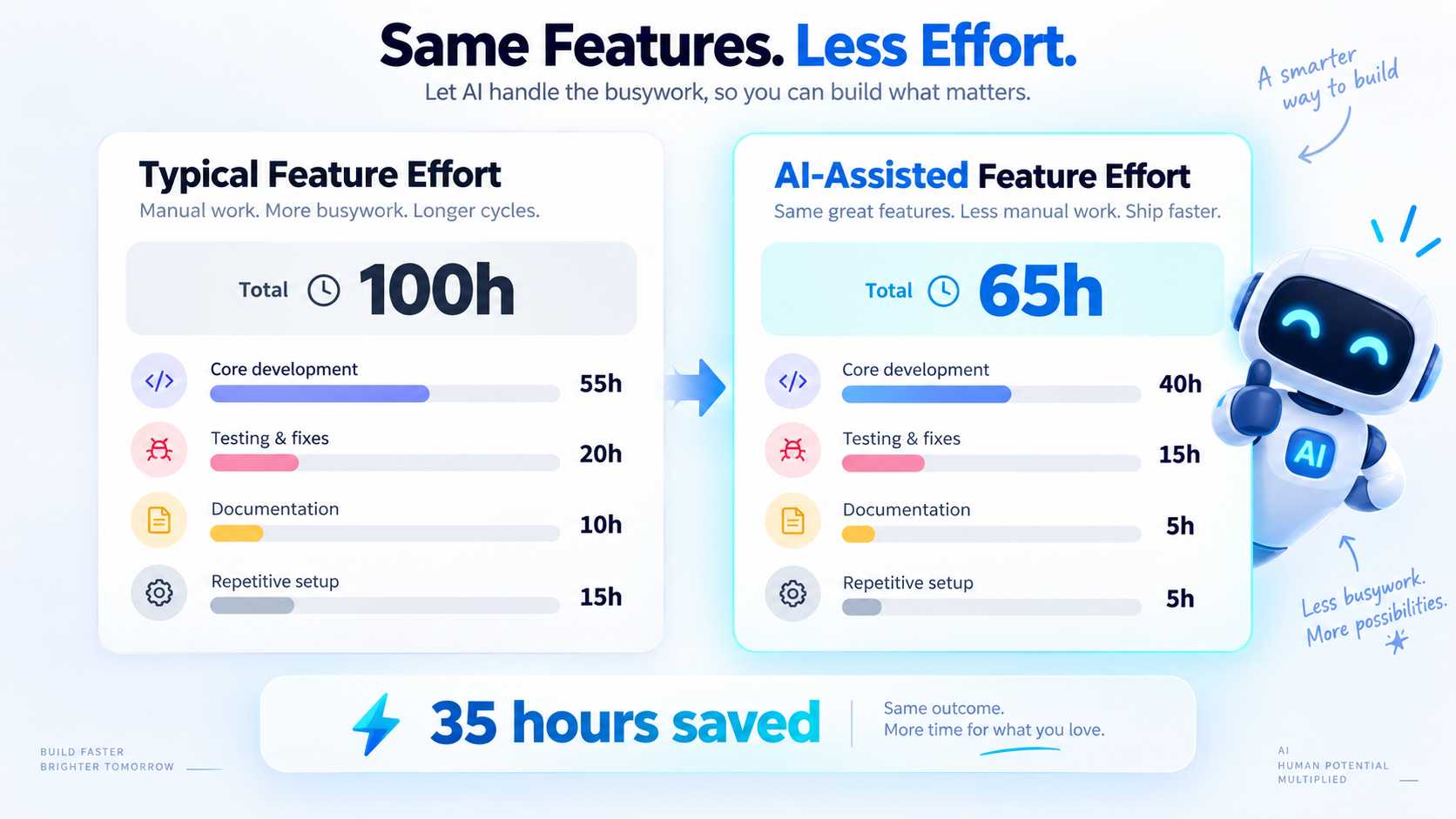
Imagine a feature normally requires: 100 development hours
| Development work | Typical effort | With good use of AI |
|---|---|---|
| Core development | 55 hours | 40 hours |
| Testing and fixes | 20 hours | 15 hours |
| Documentation | 10 hours | 5 hours |
| Repetitive setup and coding | 15 hours | 5 hours |
| Total | 100 hours | Around 65 hours |
Total: around 65 hours That is roughly: 35 hours saved on one feature.
The exact saving will vary from project to project. But across months of development, even a 20–30% reduction in effort can become significant.
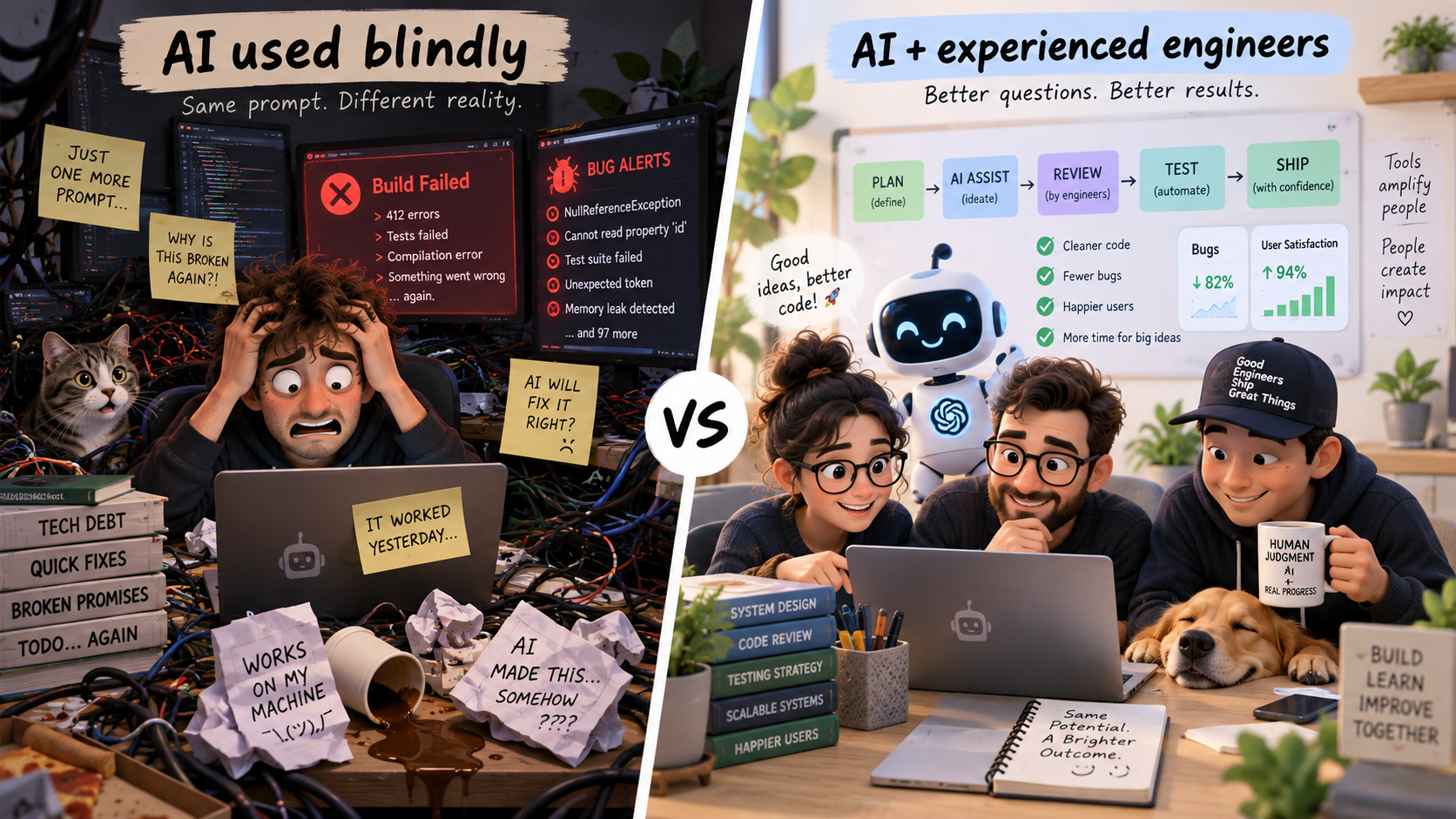
Where AI should not be trusted blindly
Faster development does not automatically mean better development. AI-generated code still needs proper technical judgement.
This becomes especially important for:
- Software architecture
- Security
- Payments
- Complex business logic
- Large databases
- Data migrations
- Performance-critical systems
- Production deployments
An AI tool may generate code that works today but creates problems six months later. The cost of fixing poor architecture can easily be higher than the original saving.
The better model: smaller, stronger teams
The biggest opportunity may not be replacing an entire development team. It may be helping a smaller experienced team produce more.
For example: Instead of: 5 developers × 160 hours = 800 hours/month
A company may eventually achieve similar output with: 3 experienced developers + AI-assisted development
That does not mean every five-person team can suddenly become three. But it changes the way founders should think about development capacity.
The question becomes: How much useful software can the team deliver? Not: How many developers do we have?
Measure output, not coding hours
Founders should avoid measuring AI success only by how quickly developers write code.
Better metrics are:
- How quickly features reach production
- Number of bugs after release
- Amount of rework required
- Cost per feature
- Time from idea to launch
- Stability of the product
- Ease of maintaining the code later
Saving 30% on development means very little if bug fixing increases by 50%.
The goal should be lower total development cost, not simply faster coding.
Where AI creates the most value
AI works best when experienced developers decide where to use it.
Let AI handle repetitive effort. Let developers handle judgement.
That combination can reduce cost while keeping the important parts of software development under human control.
How we approach it at Hupp
At Hupp, we increasingly use AI to reduce repetitive development effort while keeping architecture, reviews, testing, and production decisions with experienced engineers.
The objective is simple: Build faster where AI helps, without compromising the parts where engineering judgement still matters.
The real opportunity for founders
AI does not automatically make software development cheap. But it can make development significantly more efficient.
For founders, the opportunity is not necessarily to eliminate developers. It is to eliminate wasted development hours.
A smaller, experienced team using AI effectively can often be more valuable than simply adding more developers to a project. And over the lifetime of a SaaS product, that difference can become substantial.