
A developer accepts your offer at £60,000 a year.
It is tempting to put £60,000 into the budget and move on. But that is not what the employee will actually cost the company.
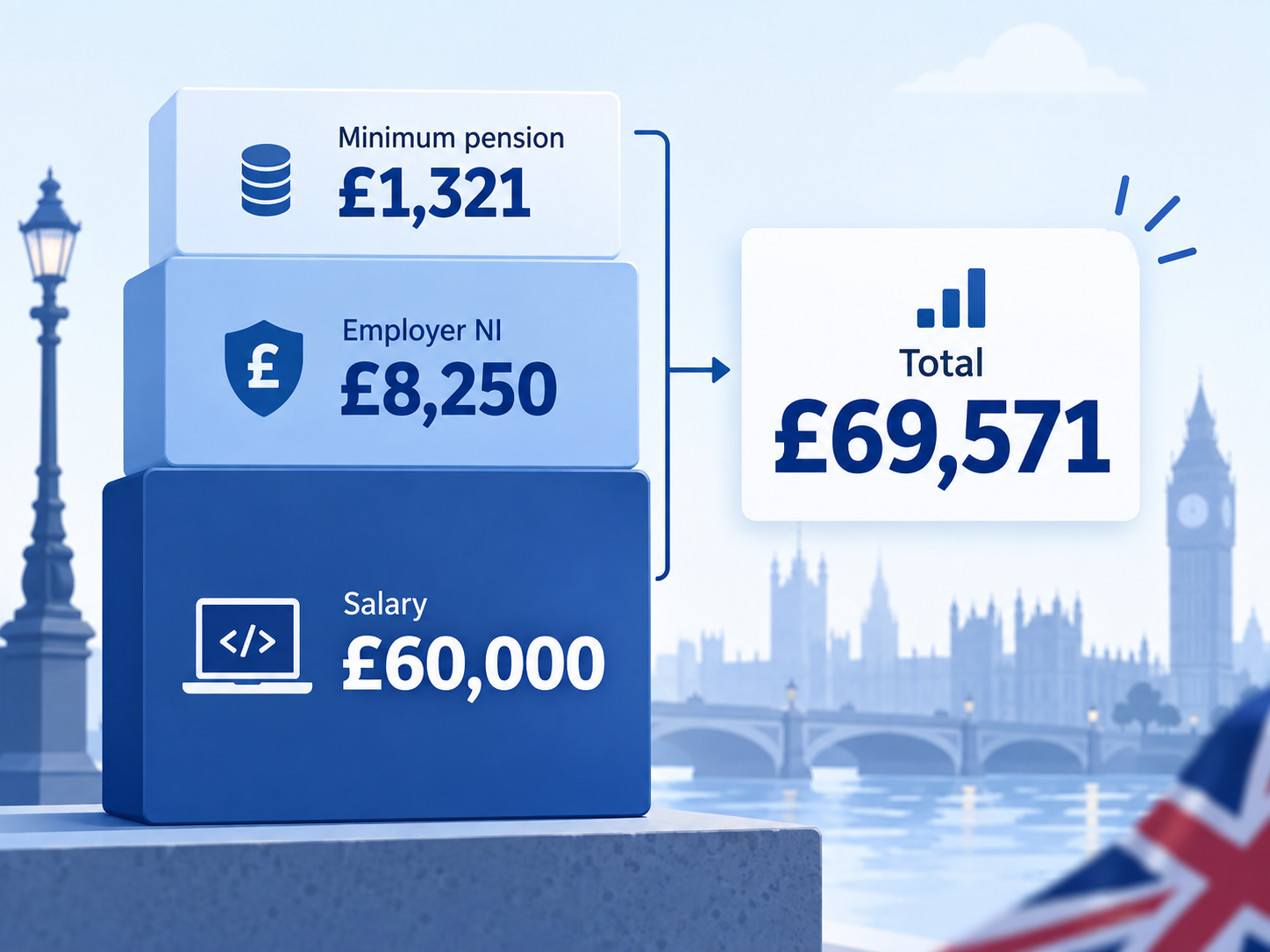
Once employer National Insurance and the minimum workplace pension are included, the direct payroll cost is already roughly £69,500 a year.
Then there is the laptop, software, recruitment, onboarding and everything else that comes with putting another person on the payroll.
None of this means hiring is a bad idea. It just means the salary on the job advert is only part of the calculation.
For a SaaS company deciding between an internal developer, a contractor or an external team, the more useful question is: What will this development capacity really cost us over a year?
What are UK developers earning right now?
Developer salaries vary a lot depending on location, experience and stack.
Robert Half's 2026 UK Salary Guide gives the following range for a full-stack developer:
| Experience level | UK salary |
|---|---|
| 25th percentile | £43,500 |
| 50th percentile | £59,000 |
| 75th percentile | £77,250 |
London pushes those numbers higher. Robert Half puts the London midpoint at around £80,250.
So if you are budgeting for an experienced developer, somewhere around £55k–£80k+ is not unusual before you have added any employer costs.
That is where the calculation gets more interesting.
A £60k developer costs more like £70k before the extras
For the 2026–27 tax year, employers generally pay 15% National Insurance on earnings above the £5,000 secondary threshold.
For someone earning £60,000:
- Salary: £60,000
- Employer NI: £8,250
There is also the employer pension contribution.
Under a typical auto-enrolment scheme, the minimum employer contribution is 3% of qualifying earnings. For a £60k employee, that works out at roughly £1,321.
So: £60,000 salary → about £69,571 in direct annual payroll cost
And we still have not bought the person a laptop.
There may also be:
- recruitment fees
- equipment
- development tools
- additional benefits
- bonuses
- training
- onboarding time
Some companies will spend very little on these. Others will spend a lot.
That is why there is no single “true” employment cost, but the direct payroll number gives you a much better starting point than salary alone.
What happens as the salary goes up?
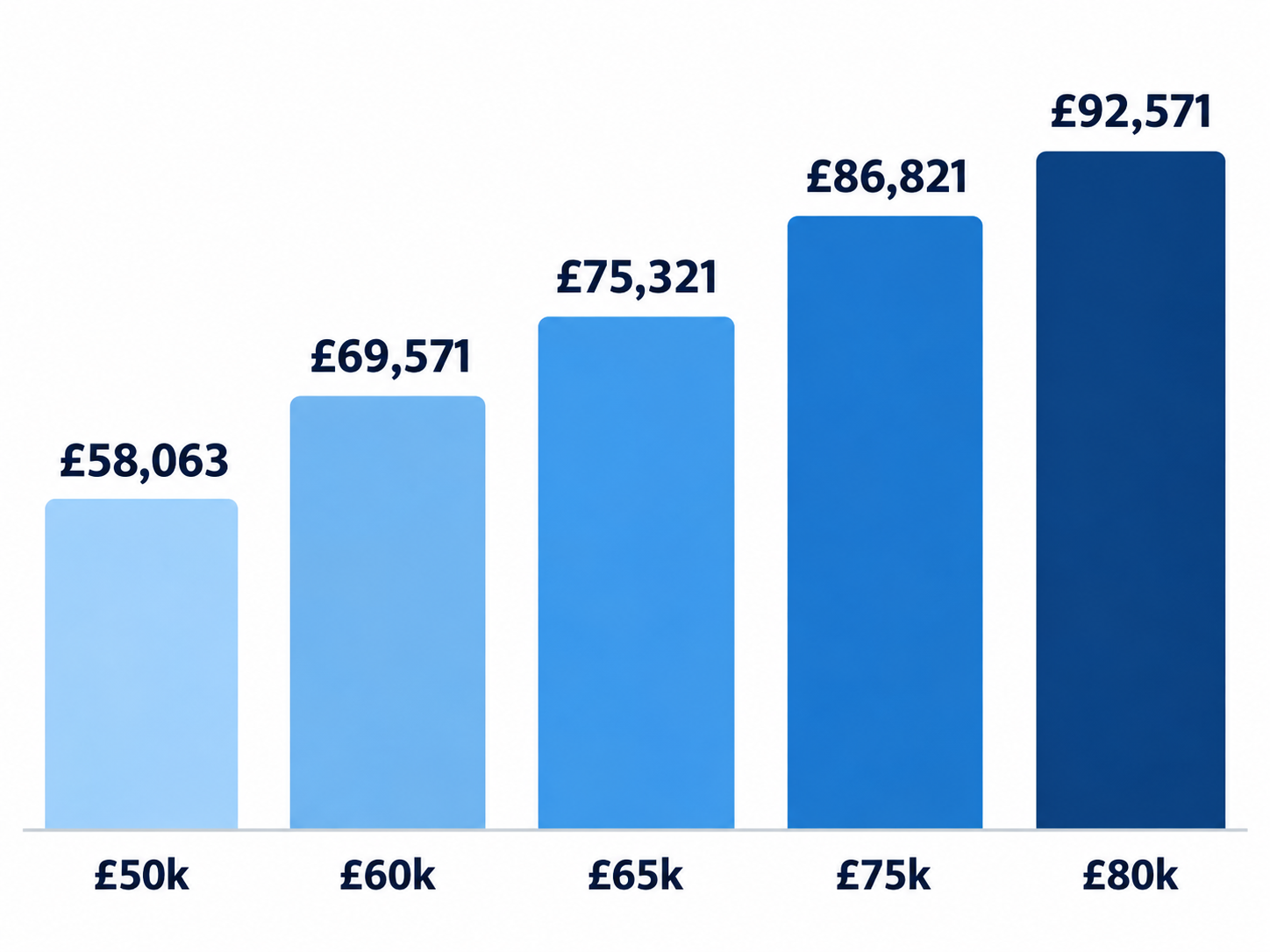
Using the same NI and minimum pension assumptions:
| Base salary | Employer NI | Minimum pension* | Direct annual cost |
|---|---|---|---|
| £50,000 | £6,750 | £1,313 | £58,063 |
| £60,000 | £8,250 | £1,321 | £69,571 |
| £65,000 | £9,000 | £1,321 | £75,321 |
| £75,000 | £10,500 | £1,321 | £86,821 |
| £80,000 | £11,250 | £1,321 | £92,571 |
*Based on the standard minimum contribution on qualifying earnings.
That £80k developer is therefore already costing roughly £92.6k before recruitment, hardware or extra benefits.
The gap between salary and actual cost gets meaningful quite quickly.
Salary also does not equal available development time
A UK employee working five days a week is normally entitled to at least 28 days of paid annual leave.
You should not add those days to the salary calculation — they are already included.
But they do matter when comparing an employee with a contractor or external development team.
The company is paying for the full year, while actual development time will also be affected by:
- holidays
- sickness
- training
- internal meetings
- administration
This is one reason why comparing: £60,000 ÷ 12
with an external team's monthly invoice does not tell you very much.
They are different models.

The part that is harder to put into a spreadsheet
The payroll maths is straightforward. Hiring the wrong person is not.
For a small SaaS company, one poor technical hire can mean several months of recruitment and onboarding followed by slow delivery, technical decisions that need undoing, and eventually another hiring process.
There is also concentration risk.
If one developer becomes the only person who properly understands the product and then leaves, the business has a problem that does not appear anywhere in the salary calculation.
That does not argue against hiring.
It argues for hiring when the role is genuinely ready to exist.
If you know you need the same capability continuously for the next few years, bringing that knowledge inside the company can be extremely valuable.
If the roadmap is still moving every few months, flexibility may be worth more.
So when does a permanent developer make sense?
A permanent hire tends to make sense when:
- there is continuous development work
- the role is clear
- you need that capability for years
- keeping the knowledge internally matters
- someone is ready to manage and develop that person
An external model starts looking more attractive when the requirement is less predictable.
Maybe you need React heavily for three months, infrastructure work the next month, and AI expertise later. One permanent employee will not necessarily cover all three well.
Or perhaps you need development immediately but are not ready to add another £70k–£100k annual commitment.
Neither option is automatically cheaper.
The sensible comparison is: cost + skills + available capacity + flexibility + how long you need it
rather than salary versus invoice.
Another way to add development capacity
Hupp provides on-demand engineers on a weekly or monthly basis.
You can add experienced development capacity without going through recruitment, payroll, employee benefits, long notice periods or another permanent headcount commitment.
For companies that need engineers now but are not ready for another full-time hire, it gives you a simpler middle ground.