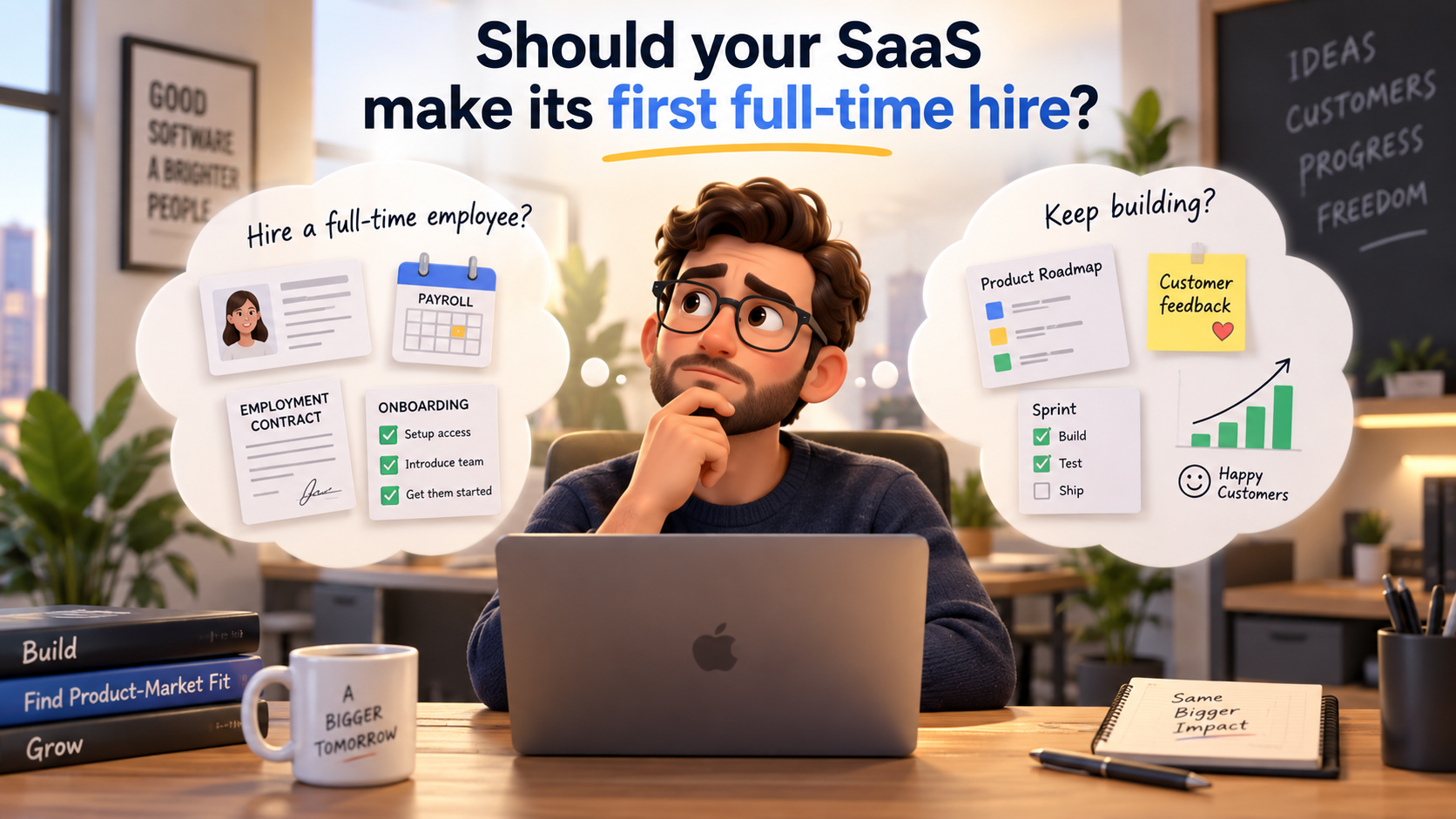
For a growing SaaS company, a full-time developer can feel like the obvious next step. More control, someone inside the business, and one less dependency.
But an early full-time hire is not just a product decision. It is a long-term people and compliance commitment. For many founder-led SaaS businesses, making that commitment too early slows down the very progress it was meant to create.
The cost of a wrong hire is much bigger than salary
A wrong hire does not only cost a few months of payroll.
It can lead to delayed releases, poor technical decisions, team friction, rework, and a product that becomes harder to maintain. Replacing that person means starting the hiring process again while fixing the work left behind.
In a small SaaS company, one unsuitable hire can set the roadmap back by months.
Employment comes with obligations, not just a monthly salary
A full-time team brings responsibilities that arrive with the first employee and never go away:
- Payroll. Run on time, every month, whether or not the product shipped.
- Taxes and statutory deductions. Withheld correctly, filed on schedule.
- Employment contracts. Written properly, and enforceable where the person actually works.
- Leave policies. Annual leave, sick leave, public holidays, and cover while someone is away.
- Statutory benefits. Whatever the local law requires, not what the company chooses to offer.
- Local labour regulations. Different in every country, and the founder is expected to know them.
And when the fit does not work out, letting someone go is rarely as simple as stopping a salary. Notice periods, severance, handover, documentation, and compliance all need attention. The exact requirements differ by country, but the founder carries the responsibility either way.

Founders can end up managing people instead of building the product
Early SaaS companies need focus. Customers need to be heard, the product needs to improve, and the business model needs to be tested.
A new internal team also needs onboarding, priorities, feedback, reviews, career conversations, and day to day support. A founder who wanted to move the product forward is suddenly spending a large part of the week on hiring and team management.
That is not always a bad thing. It is simply a different job.
Hiring takes time, and product momentum is fragile
Finding the right person can take months. The best candidate may not be available immediately, and hiring in a hurry often creates the exact mismatch the founder hoped to avoid.
Meanwhile, customer feedback waits. Competitors keep shipping. The backlog grows.
When the product is still changing quickly, flexibility is often worth more than permanent headcount.
One person should not become the whole product team
A single full-time developer can become the only person who understands the code, the infrastructure, and the decisions behind both. If they leave, the company is back where it started, except the product is now more complex than before.
Whatever the team structure, the business should keep access to its code, its accounts, its documentation, and the knowledge of how the product works. That applies to an employee, a contractor and an agency equally.

The better question is not "Should we hire?"
The better question is: what does the product need right now?
If the roadmap is stable, work is predictable, and there is enough ongoing responsibility to justify a long-term role, a full-time hire can be an excellent decision.
But if the product is still being shaped by customer conversations, changing priorities, and frequent experiments, committing too early can create more weight than momentum.
A SaaS business should hire full-time when it is ready to build a team, not simply because it needs something built.
We hear this concern often from SaaS founders we work with. That is why we built a flexible hiring model: bring in the right support weekly, monthly, or by the day, without giving up control of your product or committing to a full-time hire too early. If you would like to talk through what makes sense for your stage, choose a time that works for you.